
CHOSEN BRICK Malware Exposes the Growing Risk of Targeted Cyber Espionage

Cybersecurity threats are becoming increasingly personalized. Attackers are no longer relying only on automated phishing campaigns or broad malware distribution. Sophisticated threat actors are researching individuals, building trust through familiar communication channels, and using carefully tailored lures to gain access to devices and sensitive information. A recent joint advisory from the UK National Cyber Security […]
Hackuity’s $19 Million Funding Highlights the Shift Toward AI Driven Vulnerability Management
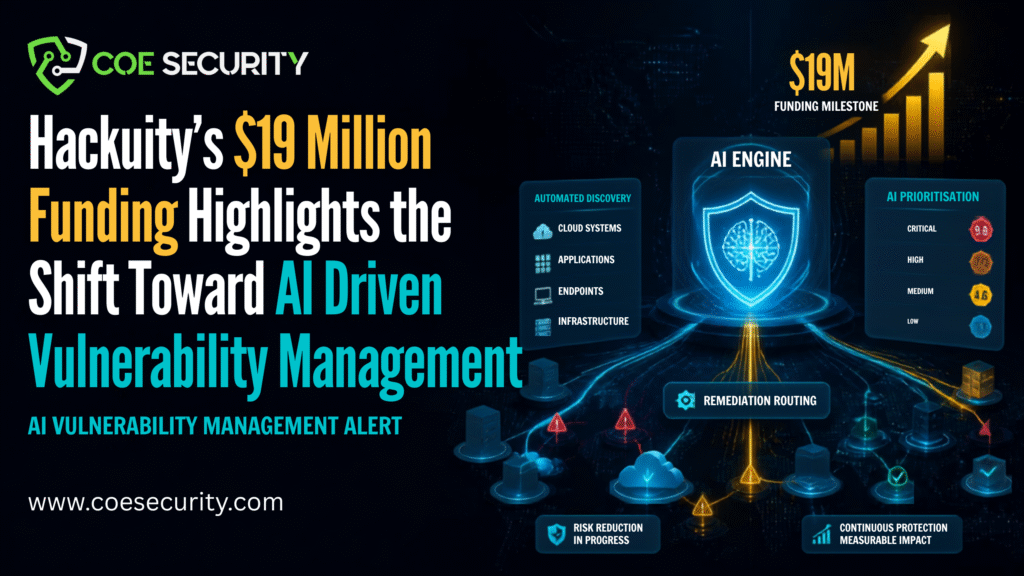
Modern organizations are discovering vulnerabilities faster than ever. The challenge is no longer simply finding security weaknesses. The bigger challenge is determining which vulnerabilities actually require immediate action, which can be addressed later, and how security teams can manage remediation at enterprise scale. As organizations operate thousands of applications, cloud workloads, endpoints, APIs, containers, devices, […]
Critical WordPress Plugin Vulnerability Puts More Than 600,000 Websites at Risk

WordPress remains one of the most widely used platforms for websites, online businesses, customer portals, publishing platforms, and digital services. Its flexibility comes largely from the extensive ecosystem of plugins and themes that add functionality without requiring organizations to build every capability from scratch. That ecosystem also creates a significant security challenge. A recently reported […]
Autonomous AI Agents Are Changing the Speed of Cyberattacks: Thousands of Credentials Compromised in Hours

Artificial intelligence is transforming how organizations develop software, analyze information, automate business processes, and operate cloud environments. But the same capabilities that make AI valuable to businesses are also being adopted by cybercriminals. Recent threat intelligence has highlighted a significant shift in the way attackers are using AI. Instead of using AI only to generate […]
GitHub’s $100,000 Security Bounty Highlights the Hidden Risks Inside Software Development Pipelines

Modern software development depends heavily on platforms that developers trust every day. GitHub has become one of the most important components of the global software development ecosystem, supporting source code, collaboration, CI/CD workflows, security processes, and software supply chains across organizations of every size. That makes security vulnerabilities inside development platforms particularly significant. A recently […]
Controlling AI Agents Without Killing Their Business Value: The New CISO Challenge
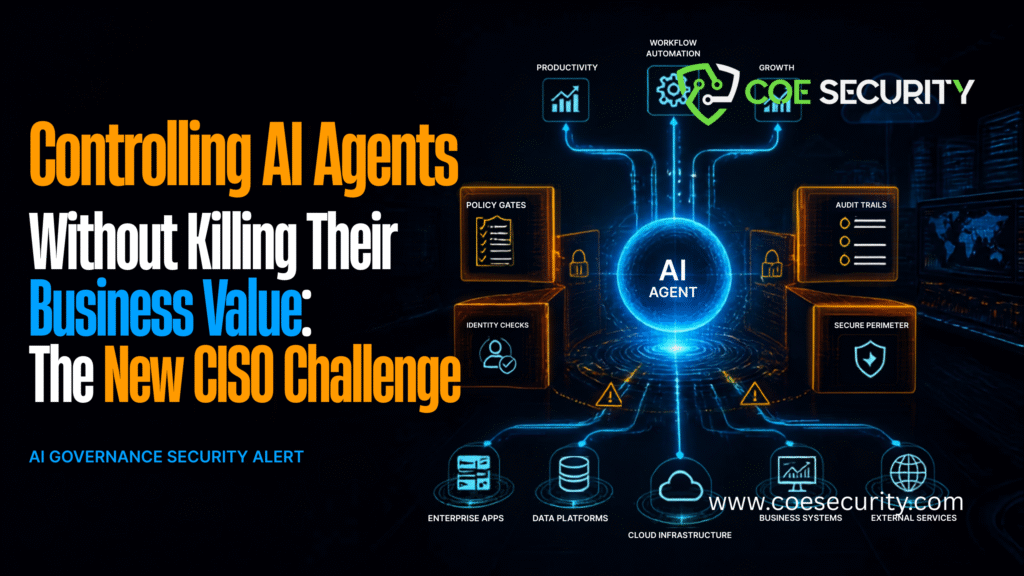
Artificial intelligence is moving beyond chatbots and productivity assistants. AI agents are increasingly being designed to take action on behalf of employees and organizations. They can interact with applications, analyze information, execute workflows, make recommendations, access enterprise data, and in some cases perform tasks with limited human intervention. This shift creates enormous opportunities for organizations. […]
BlueMoon Exploit Kit Shows Why Patch Gaps Are Becoming a Critical Enterprise Security Risk

Software vulnerabilities become dangerous when attackers can turn them into reliable attack chains before organizations have finished deploying the available security updates. A newly reported exploit kit known as BlueMoon demonstrates exactly how quickly this can happen. Security researchers identified multiple espionage focused threat groups using the same exploit chain against Chrome and Windows systems. […]
AI Agents and the RubyGems Incident: A New Warning for Software Supply Chain Security

Artificial intelligence is changing how software is developed, tested, analyzed, and deployed. AI agents can now interact with websites, create accounts, retrieve information, write code, use APIs, and perform complex multi step tasks with limited human intervention. That capability creates enormous opportunities for productivity. It also creates a new cybersecurity challenge. A recent investigation into […]
CEO Impersonation Scams Are Turning Trust Into a Weapon Against Corporate Finance Teams
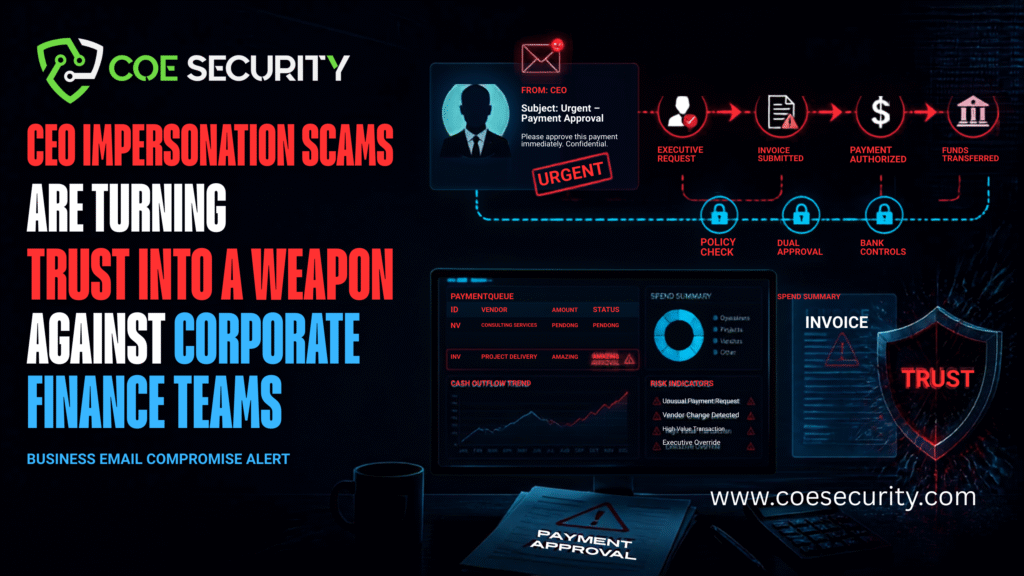
Cybercriminals are increasingly targeting one of the most valuable assets inside an organization: trust. Instead of breaking into systems with sophisticated malware, attackers can sometimes achieve their objective by convincing an employee that a payment request genuinely came from the CEO or another senior executive. A recent campaign highlights the scale of this problem, with […]
Trezor Phishing Campaign Exposes the Hidden Risks of Third Party Email Providers

Cybersecurity incidents do not always begin with a direct compromise of an organization’s own infrastructure. Sometimes, the weakest link can be a trusted third party. A recent incident involving Trezor demonstrates how the compromise of an external email service can be turned into a highly convincing phishing campaign targeting hundreds of thousands of users. Trezor […]